
Difference Between 3 Pin and Type 2 EV Chargers - Which One Should You Choose?
Posted by Car Chargers on 14th Jul 2026
As electric vehicles become more common and rapidly grow on UK roads, choosing the right charging option is essential for convenience and efficiency. Many new EV owners often compare a 3 pin EV charger with a Type 2 charging setup. Even though both sound similar, understanding the differences can help you make a smarter decision for your daily charging needs.
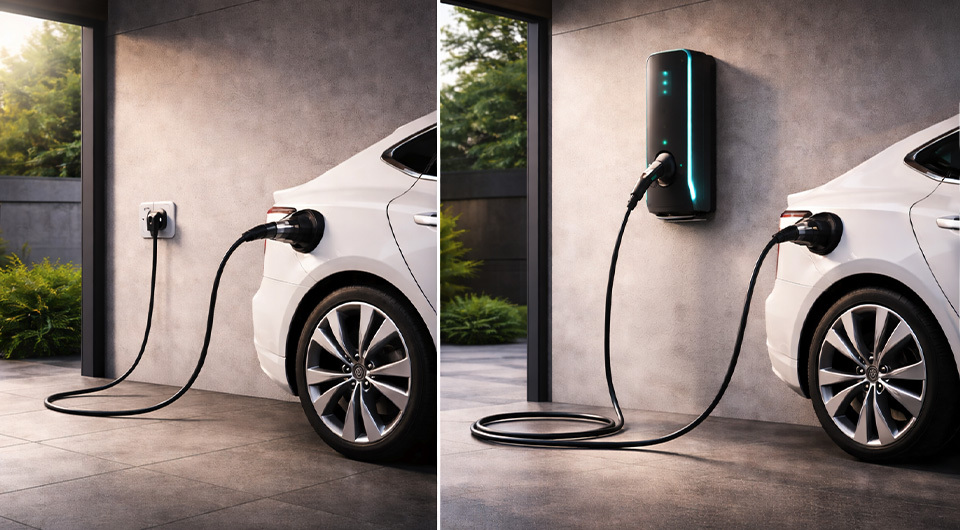
What is a 3 Pin EV Charger?
A 3 pin electric car charger is the most basic way to charge your EV. It uses a standard household socket (typically a 3-pin plug) to make it accessible without installing any additional infrastructure. Often referred to as a car charger to 3 pin plug, this setup is usually supplied with the vehicle as a backup charging option.
While being convenient, charging with a 3 pin plug car adapter is slow. A full charge can take more than 24 hours depending on the battery size, making it less practical for regular use.
Features of 3 Pin EV Charger
- Uses a standard domestic socket
- Power output typically around 2.3kW when charging from a standard UK domestic socket
- Requires no installation
- Suitable for emergency or occasional use
- Easy to plug in
What is a Type 2 EV Charger?
A Type 2 connector is designed specifically for EV charging and is widely used for AC charging in the UK and Europe. A Type 2 electric car charger typically refers to an AC charging setup that uses a Type 2 connector and connects to a dedicated wallbox or public charging station.
This setup uses a Type 2 connector, which is designed for safe and efficient EV charging between the vehicle and the charging equipment. When used with a dedicated wallbox or public AC chargepoint, Type 2 charging can provide significantly more power than a standard 3-pin socket.
Features of Type 2 EV Charger
- High power output, typically 7.4kW from a home wallbox
- Requires a dedicated charging unit
- Compatible with public EV charging stations
- Ideal for regular home and workplace charging
Differences Between 3 Pin and Type 2 Chargers
Charging Speed
The biggest difference lies in charging speed. A 3 pin plug EV charger provides relatively slow charging, while a dedicated Type 2 AC charging setup can deliver significantly more power.
- 3 pin: 24+ hours for a full charge, depending on battery size and charging conditions
- Type 2: 4–8 hours, depending on the charger, vehicle and battery size
If you rely on your EV daily, a Type 2 electric car charger is far more practical.
Power and Efficiency
A 3 pin plug electric car charger operates at relatively low power, resulting in longer charging times. In contrast, dedicated Type 2 AC charging setups can provide higher power and significantly reduce charging time.
Safety
A car charger with a 3-pin plug is safe for occasional use, but it is not designed for continuous high load charging. Do not use a standard extension lead or multi-plug adapter for EV charging unless it is specifically designed and approved for that purpose.
Standard sockets can overheat if used for extended periods. Dedicated Type 2 charging systems are designed specifically for EV charging and use dedicated charging equipment with appropriate electrical protection and communication between the vehicle and chargepoint.
Convenience for Regular Use
A 3 pin plug car adapter is useful as a backup, especially when travelling or in emergencies. However, it is not ideal for daily use due to slow speeds.
A Type 2 charger, on the other hand is designed for routine charging at home or work, and makes it the preferred option for most EV owners.
Cable and Compatibility
Type 2 systems commonly use a Type 2 charging cable for Mode 3 AC charging, allowing communication between the vehicle and charging equipment.
Let’s familiarise the terms:
- Type 2 = EV charging connector/interface
- Type 2 cable = charging cable incorporating a Type 2 connector
- 3 Pin EV Charger = consumer term for a portable EV charging unit that plugs into a UK domestic socket
- 3-pin plug = UK domestic plug used to connect the portable charger to a socket
- EVSE = equipment that provides the control and safety functions required for EV charging
- Wallbox/chargepoint = dedicated EV charging equipment
- Mode 2 = charging using a standard socket with an in-cable control and protection device, as used by typical portable 3-pin EV chargers
- Mode 3 = charging through dedicated EV charging equipment
- 7 kW/11 kW/22 kW = charging power, subject to the vehicle and electrical installation
Which One Should You Choose?
The right option depends on your driving habits, parking arrangements, vehicle and access to dedicated charging equipment. But consider these factors:
Choose a 3 pin EV charger if:
- You need a backup option
- You drive short distances
- You don’t have access to a dedicated charger or wallbox
Choose a Type 2 car charging setup if:
- You charge your EV regularly
- You want faster charging times
- You’re installing a home charging solution
For most drivers, a Type 2 electric car charger is the better long-term investment due to its speed, safety, and efficiency.
Understanding the difference between a 3 pin EV charger and a Type 2 charging cable is key to optimising your EV experience. While 3-pin charging offers flexibility and convenience in certain situations, it cannot match the performance of a dedicated Type 2 setup.
As EV adoption continues to grow, relying on faster and more efficient solutions like Type 2 EV chargers will make your driving more convenient and practical.